

How many of your next five deals depend on one person, or on one market? If the honest answer is “mostly me, and mostly here,” you already know why unstable times feel so personal. Funding takes longer, buyers go quiet, and the weight lands on the same shoulders.
That is where fintech revenue resilience matters. It means a pipeline that depends on neither one person nor one market, sales costs that move with your results, and proof your buyers can check. In this article, we explain how to build it, and why for most fintechs the answer is flexible, outsourced sales capacity, not a bigger fixed team.
Key takeaways :
- Risk-off hits the pipeline first. Cycles stretch long before your P&L shows it.
- Concentration is a quiet risk. Relying on a single market leaves revenue exposed when local conditions shift.
- Hiring adds fixed cost before revenue. Structure should come before capacity.
- Outsourced sales gives you flexible capacity, with costs tied to results.
What is revenue resilience for a fintech?
It is the quiet confidence of knowing your next quarter does not hang on a single phone call. In practical terms, revenue resilience is the ability to keep producing qualified pipeline and signed contracts when conditions get harder, without panic hiring or panic cutting. Four questions test it:
- Coverage: would your pipeline hold if your best seller, or you, stepped away tomorrow?
- Spread: what share of your pipeline depends on a single country or region?
- Flexibility: can your sales costs move up or down with results, instead of staying fixed whatever happens?
- Proof: can you show a cautious buyer your ROI, compliance posture and references, quickly?
When one of the four is missing, growth rests on luck, and luck is a hard thing to plan around. We covered the foundations in Predictable Sales Pipeline: Why Yours Isn’t Scaling.
Why does a risk-off market hit fintech sales first?
Fintech sales cycles were already long, regulated and full of stakeholders. When markets turn cautious, everyone in the chain becomes more careful, and carefulness is slow:
- Investors watch runway. Each missed quarter gets a closer look.
- Buyers delay or trim. Higher borrowing costs push projects back.
- Vendor risk reviews deepen. More people ask about ROI, operational resilience and compliance before they sign.
A full pipeline can look reassuring while the cash arrives later than your costs. That gap is where founders lose sleep.
Is resilience also about not depending on a single market?
Yes. When social or political tension, economic uncertainty or shifting borrowing costs disturb a region, the effects reach sales in quiet ways, especially in fintech, where trust and compliance sit at the center of every purchase.
- Buyers hesitate. Projects get postponed when confidence in the local outlook drops.
- Concentration amplifies. A pipeline built mostly on one country moves in one direction, whatever your team does.
- Decisions slow down. More stakeholders ask for reassurance on continuity and vendor risk.
None of this means leaving your home market. It means making sure it is not your only one. A diversified pipeline, with a second and third region progressing in parallel, turns a local slowdown into a manageable dip instead of a stop. With outsourced capacity, you can test a new region before committing to a local hire.
Why is hiring more salespeople the wrong first move?
Hiring feels like taking back control, and in a worrying quarter, control is exactly what you want. But three things work against you:
- Fixed cost from day one. Salary and tools start immediately. Revenue does not.
- Slow ramp-up. A new seller needs months before contributing, in a market that does not wait.
- Scarce profiles. In Finelis’ own figures, 47% of CEOs say recruitment is difficult or impossible, 77% lack suitable sales profiles, and 48% want stronger teams but lack the time and know-how.
A new hire without a clear process also rebuilds the same bottleneck, only with one more person inside it. That is why we start with structure first, capacity second. See Structure Your Sales Team Before You Scale to AI and Marketing Without Hiring: 3 Levers That Actually Drive Growth.
This is not a case against salespeople. Human-led selling is what closes regulated deals: someone who listens, senses a compliance officer’s hesitation, and knows which question to ask next. The real question is how you build that capacity without carrying its cost through every downturn.

How does outsourced sales build revenue resilience?
Done well, outsourced sales, also called Sales-as-a-Service, answers all four tests. At Finelis, we build it block by block, so you pay only for what your business needs:
- Strategic audit: a rapid, objective look at your sales operations, positioning and tools.
- Target countries: we scope them with you, from France alone to adding the US, Latin America or APAC.
- Sales engine: continuous multi-channel prospecting, around 50 targeted prospects a month.
- Qualified meetings: you pay per meeting, and a no-show is never billed.
- Fractional head of sales: senior leadership without the cost of a full-time executive hire.
- Coaching: we upskill the team you already have.
The commercial model is built to share the risk. After month 6, the fixed fee on completed blocks decreases and a variable commission based on signed contracts takes over. And it is never a black box: our methodology is transferred to your team.
To see what this looks like in practice, watch our video Stop Losing B2B Deals. When you are ready to compare options, our pricing page shows the indicative budgets for each block. To decide which functions to outsource first, read The Two Functions Scale-Ups Outsource First: Who Sells, and Who Proves It.
How resilient is your revenue? A 6-question self-check
Answer yes or no, and be honest with yourself:
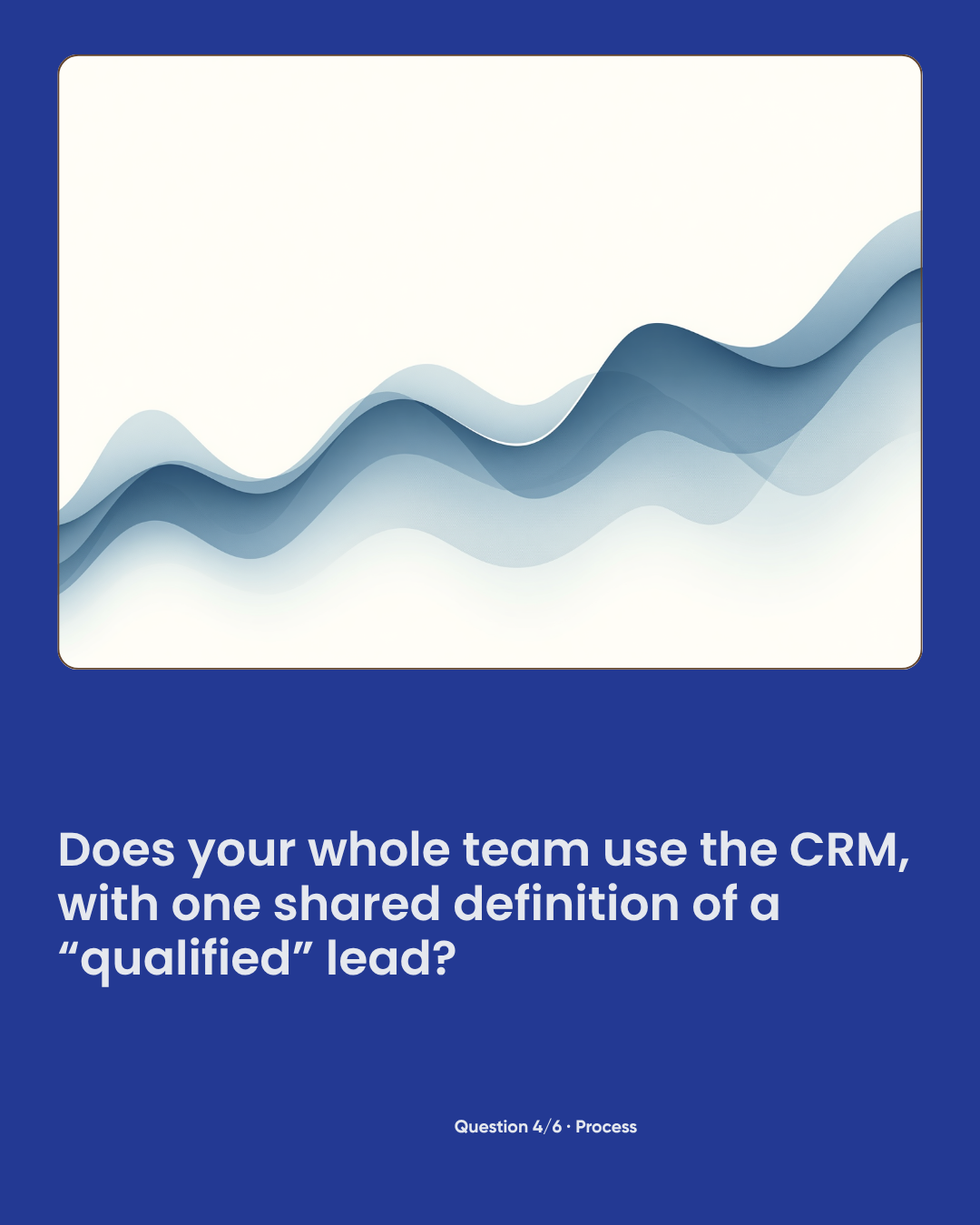

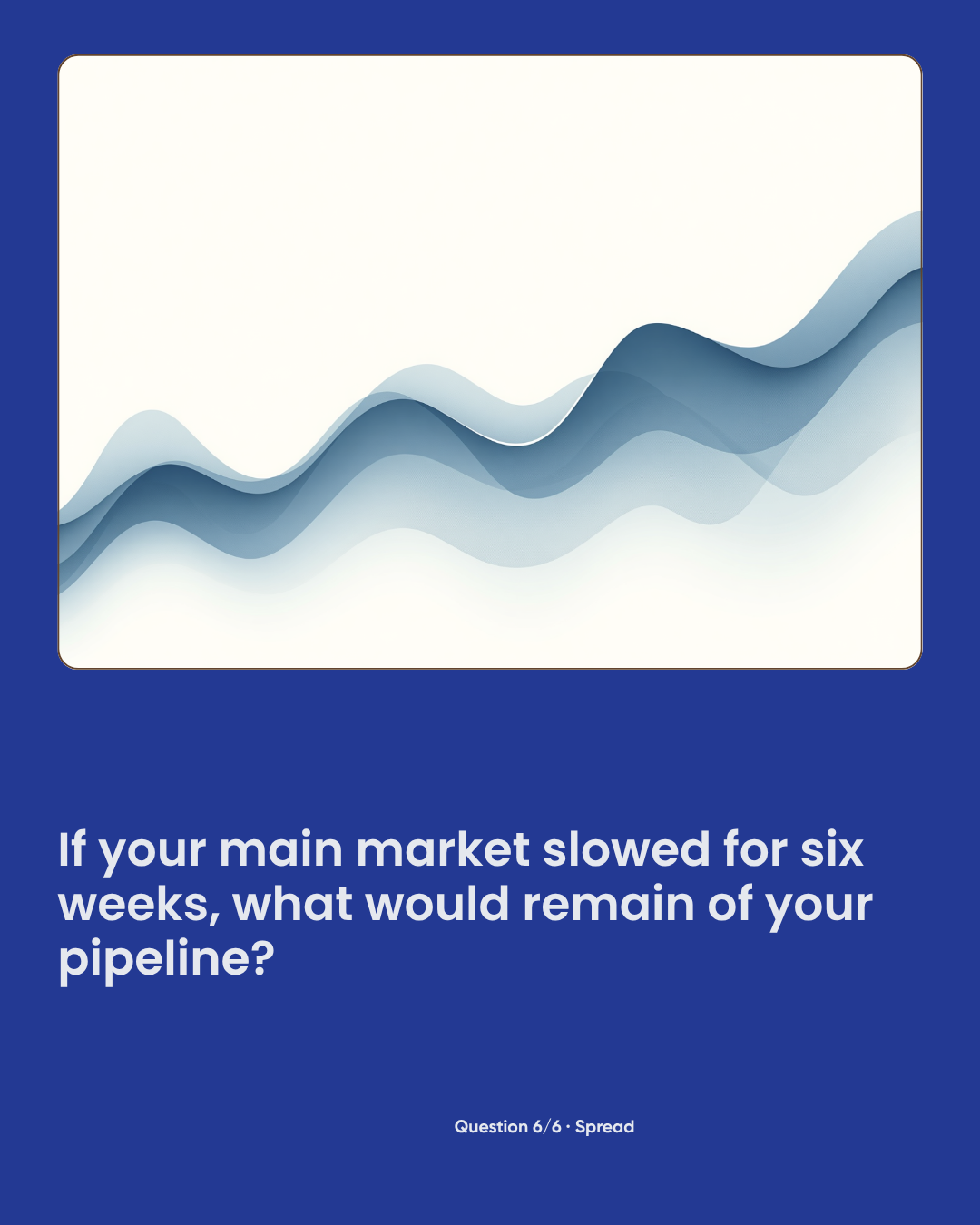




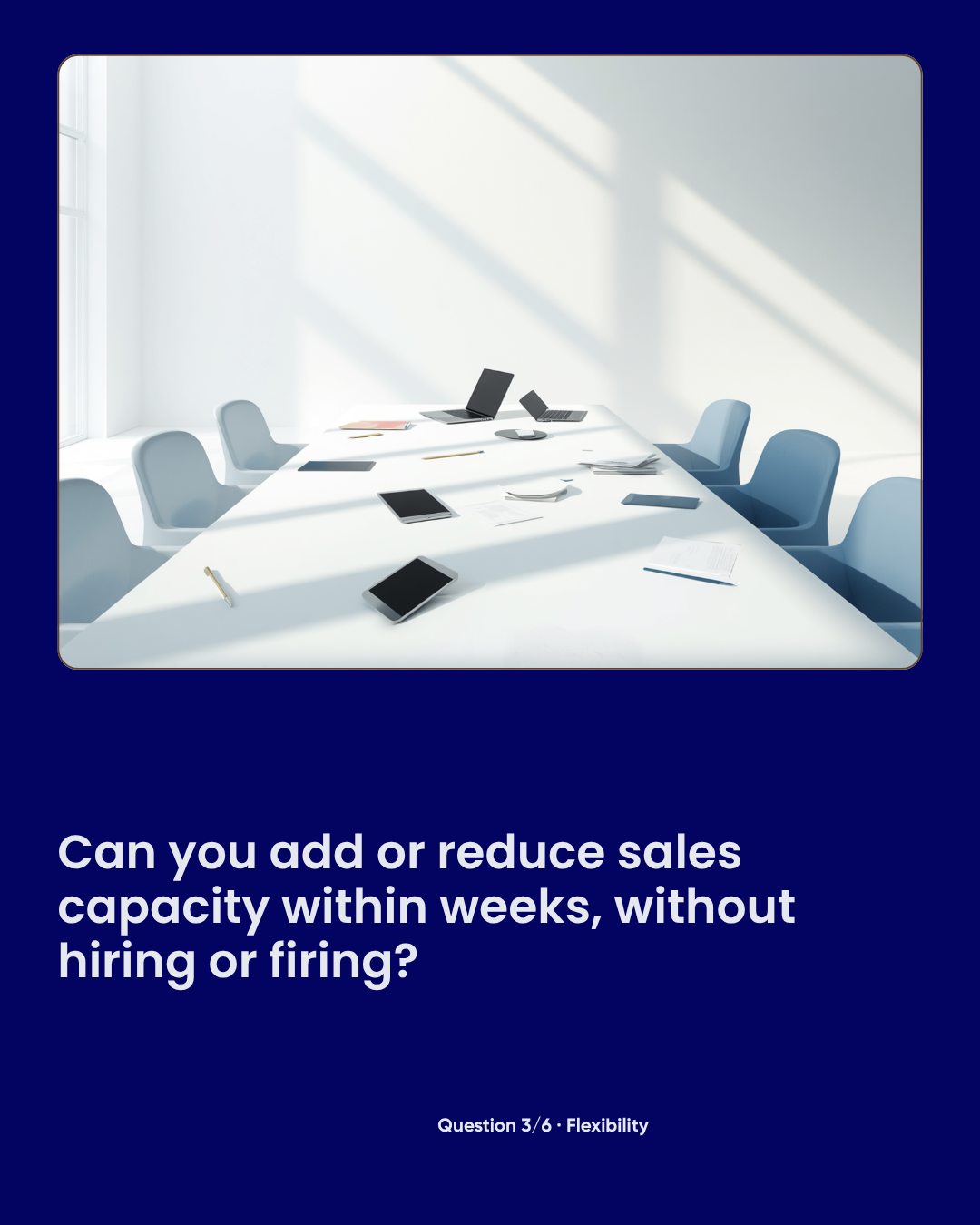
Count your “no” answers.
Zero or one: your base is solid. Two or three: you are exposed, and it is better to know now. Four to six: your revenue is fragile, and a short sales audit is the right first step before adding anything.
FAQ
It is the ability to keep generating qualified pipeline and signed contracts in a downturn, through a pipeline that depends on neither one person nor one market, costs that flex with results, and proof buyers can verify.
By spreading the pipeline across at least two regions, tracking how much of it depends on each, and using flexible sales capacity to test a new market before committing to a local team.
It depends on the blocks you choose and who does the work. That is why we begin with an audit to scope one objective, one budget and one scope.
It usually starts faster, because recruiting and onboarding are skipped. The first step is defining your ideal customer profile and message.
No, as long as the setup includes shared CRM access, approved messaging and your validation of any regulated claim. You stay in control of what is said, and to whom.
When there is no clear offer or target market yet. Start with an audit to find out where you stand.
Back to the question
How many of your next five deals depend on one person, or on one market? If the answer worries you, that is a good moment to talk, before the market decides the timing for you. Book a sales audit with our team. For the leadership side of the same challenge, read our companion article on leading a fintech through uncertainty.
Need a team to put this into practice? We adapt to each team’s level of autonomy:
➡️ Done for you (we run it for you)
➡️ Done with you (we build it together)
➡️ Done by yourself (we coach you through it)
Three formats, one conviction: nothing replaces the human who knows which questions to ask before flipping the switch.
How many of your next five deals depend on one person?
Book a sales audit and find out where your revenue is exposed, before the market decides for you.
Book a sales audit